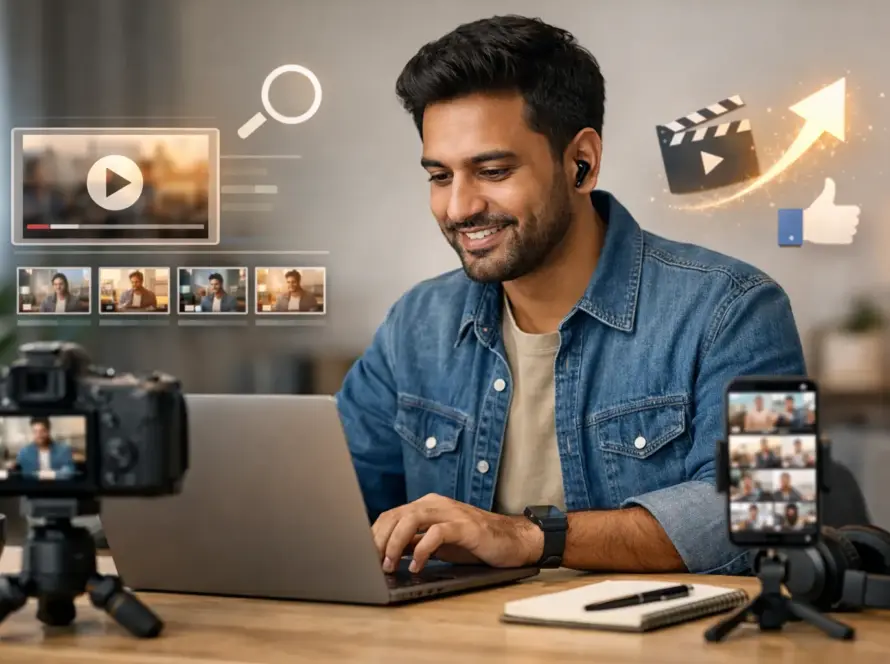
A 20-second video can now do more than collect views. It can introduce a musician’s new track, sell access to a private community, spark a live conversation, and earn direct support from fans. That is why the phrase क्रिएटर अर्थव्यवस्था भविष्य ट्रेंड matters: the next chapter is not simply about going viral. It is about turning creative attention into a durable, creator-owned business.
For emerging creators, the opportunity is bigger than polished production. Audiences are looking for personality, participation, and a reason to return. The creators who build for those needs will have more options than those who depend only on reach.
1. AI will become a creative partner, not a replacement
AI is moving from a novelty feature to a daily production tool. Creators will use it to shape a rough idea into a visual concept, turn text into a video draft, generate music for an original format, or create a fast first edit from raw footage. That changes the speed of creation, especially for people making content between college, work, rehearsals, or a small business.
The real advantage is not producing more videos for the sake of it. It is reducing the friction between an idea and a publishable post. A comedian can test a character concept quickly. A fashion creator can storyboard a transition before filming. A musician can pair a song snippet with AI-generated visuals that fit its mood.
Still, AI cannot manufacture a point of view. Feeds already have enough generic clips, recycled captions, and trend copies. The strongest AI-assisted content will begin with a human insight: a local joke, a recognizable style, a personal story, or a creative challenge that gives viewers something to feel and respond to.
2. Short video will lead to deeper content journeys
Short-form video remains the fastest way to earn a first watch, but a single post is rarely enough to create loyalty. The future format is a content journey: a short clip captures interest, a comment opens a conversation, a live stream builds familiarity, and exclusive content gives committed fans a reason to stay close.
This does not mean every creator needs to post everywhere or make long videos. It means each format should have a role. A makeup creator might use quick videos for product looks, live sessions for real-time questions, and premium posts for detailed tutorials. A gamer might share highlights publicly, then offer subscribers behind-the-scenes play sessions or early access to new content.
Creators should think less about isolated uploads and more about what happens after someone watches. Is there a clear next step? Can viewers find related videos through hashtags, sounds, or a profile? Is there a reason to comment, follow, join a live, or support the creator directly?
3. Community signals will matter more than vanity metrics
A million views can be exciting. But views alone do not always mean a creator has an audience that trusts them. Over the next few years, community signals will carry more weight: repeat viewers, meaningful comments, live participation, saved posts, direct messages, gifts, and the number of fans who choose to pay for closer access.
That shift is good news for niche creators. A creator focused on indie music, regional comedy, mobile gaming, fitness at home, street fashion, or art process videos may not need mass reach to build a sustainable presence. They need the right audience to recognize their value.
The trade-off is that community takes work. Replying to comments, asking better questions, acknowledging regular viewers, and creating recurring series requires consistency. But it also creates a stronger moat than chasing every trending sound. A viewer who feels seen is more likely to return than one who merely scrolled past an entertaining clip.
Build participation into the format
The most effective creators will make their audience part of the content. They will ask fans to choose the next song cover, submit a challenge prompt, vote on a live topic, remix a sound, or share reactions. Participation turns passive watching into shared ownership.
That is especially powerful for short-form platforms built around discovery and interaction. Tools such as comments, chat, live streams, gifting, search, and trend participation are not separate features. Together, they create a place where a creator’s audience can become a community.
4. Direct monetization will reduce dependence on advertising
Brand deals and advertising will remain valuable, but they are not always predictable. Campaigns can be seasonal, budgets can change, and a creator may have limited control over what fits their voice. Direct monetization gives creators more ways to earn from the people who already value their work.
Subscriptions, premium content, tips, in-chat gifts, and live-stream gifting will become more central to the creator economy. They work particularly well when the offer is clear. Fans may pay for early releases, members-only live sessions, personalized feedback, a private content series, exclusive music demos, or simply the chance to support someone whose work they enjoy.
Creators should be careful not to put every good idea behind a paywall. Free content is still the discovery engine. Paid access should deepen the relationship, not punish viewers for arriving late. The best model is usually a generous public layer paired with a more personal or valuable premium layer.
5. Trust, safety, and ownership will shape creator choices
As creators earn more through social platforms, they will pay closer attention to control. They will want clear privacy settings, reliable moderation, transparent earning tools, protection against impersonation, and better visibility into how their content is discovered.
This is not a side issue. A creator cannot build confidently when harassment, copied content, or unclear monetization rules interrupt their work. Platforms that give people practical controls over who can view posts, interact, message, and access content will stand apart.
Creators also need their own systems. Save original files, keep track of what content performs well, organize recurring ideas, and avoid building a brand around one trend alone. Platform reach can change. A recognizable identity travels further.
6. AR will make short video more expressive and interactive
Filters once served as simple visual decoration. Immersive AR effects are becoming part of the story itself. They can transform a dance clip into a stylized performance, make a comedy sketch more surprising, turn a room into a game-like setting, or help beauty and fashion creators show ideas in more imaginative ways.
The key is relevance. An effect should add energy, emotion, humor, or clarity. If it distracts from the creator, it may earn a quick glance but not a follow. When it supports a recognizable format, it can become a signature.
AI-generated video tools and AR effects also lower the barrier for creators who do not have studio equipment or editing experience. Short Flixx reflects this direction by bringing AI video creation, AI music, AR effects, discovery, and direct creator earning tools into a mobile-first experience. The technology matters because it gives more people a practical way to turn ideas into content worth watching.
7. The creator economy future trend is specialization with personality
The biggest misconception about creator success is that everyone must become broadly famous. The more realistic opportunity is to become unmistakably useful, entertaining, or memorable to a specific group of people.
A creator can own a format rather than a category: five-minute-budget recipes cut into fast episodes, guitar riffs built from follower requests, gaming tips for a specific title, or funny observations about everyday family life. The topic gets attention, but the personality earns the follow.
This is where experimentation matters. Try different hooks, posting times, sounds, edits, and calls to action. Watch what brings comments rather than only views. Then repeat what works without making every post feel identical. Consistency is not sameness. It is giving viewers a recognizable reason to come back.
The future belongs to creators who treat technology as a canvas, their audience as collaborators, and monetization as a relationship built on real value. Make the next post worth more than a swipe. Give people a reason to participate, remember it, and return.